
Today marks World Standards Day, a joint initiative of the IEC, ISO and ITU, whose 2026 theme puts the spotlight on SDG 7 – Affordable and Clean Energy. In Europe, it also coincides with the start of the European AI Innovation Month, which opens today in Ireland with the International AI Summit and concludes on 17 November in Brussels with the European Apply AI Summit, another field where standards will shape how new technologies are developed and trusted.
Why standardisation matters for Europe
The overlap is a useful reminder of what standards do for Europe. They translate shared policy goals into technical rules that apply across the single market, allowing a hydrogen pipeline, a battery or an AI system to be developed in one Member State and used safely in another. Without agreed requirements on safety, performance and interoperability, even the most promising technologies struggle to scale. For European research, standards are one of the most direct routes by which publicly funded results reach the market, and those who take part in developing them help decide the rules that future technologies will follow.
Research at the centre of a new European framework
European policy increasingly reflects this. On 6 October 2026, the European Commission proposed a new Regulation on European standardisation that frames standardisation as a way to valorise research results, requires effective representation of research and innovation stakeholders, and aims to cut the average development time of a harmonised standard from around six to four years, closer to the lifespan of a research project. The proposal will now be examined by the European Parliament and the Council.
What HSbooster.eu learnt about the green transition
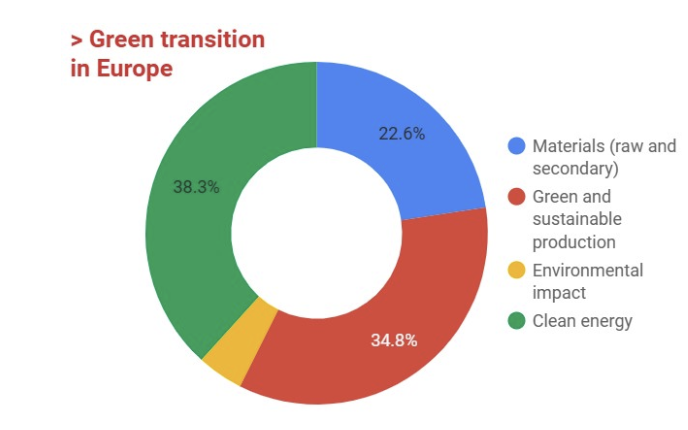
This year’s focus on clean energy echoes what the first edition of HSbooster.eu observed among European research projects. Under its Green transition in Europe topic, clean energy was the most represented area, accounting for 38.3% of applications, followed by green and sustainable production at 34.8%, raw and secondary materials at 22.6%, and environmental impact for the remainder.
Support for projects today
HSbooster2 builds on this experience, supporting EU- and nationally-funded projects free of charge through the Proposal Support Service, open since 1 September 2026, the Mentoring Service and the Standards Accelerator Service, with the Training Academy running alongside all three. The green transition remains a priority, as reflected in its open call topics.